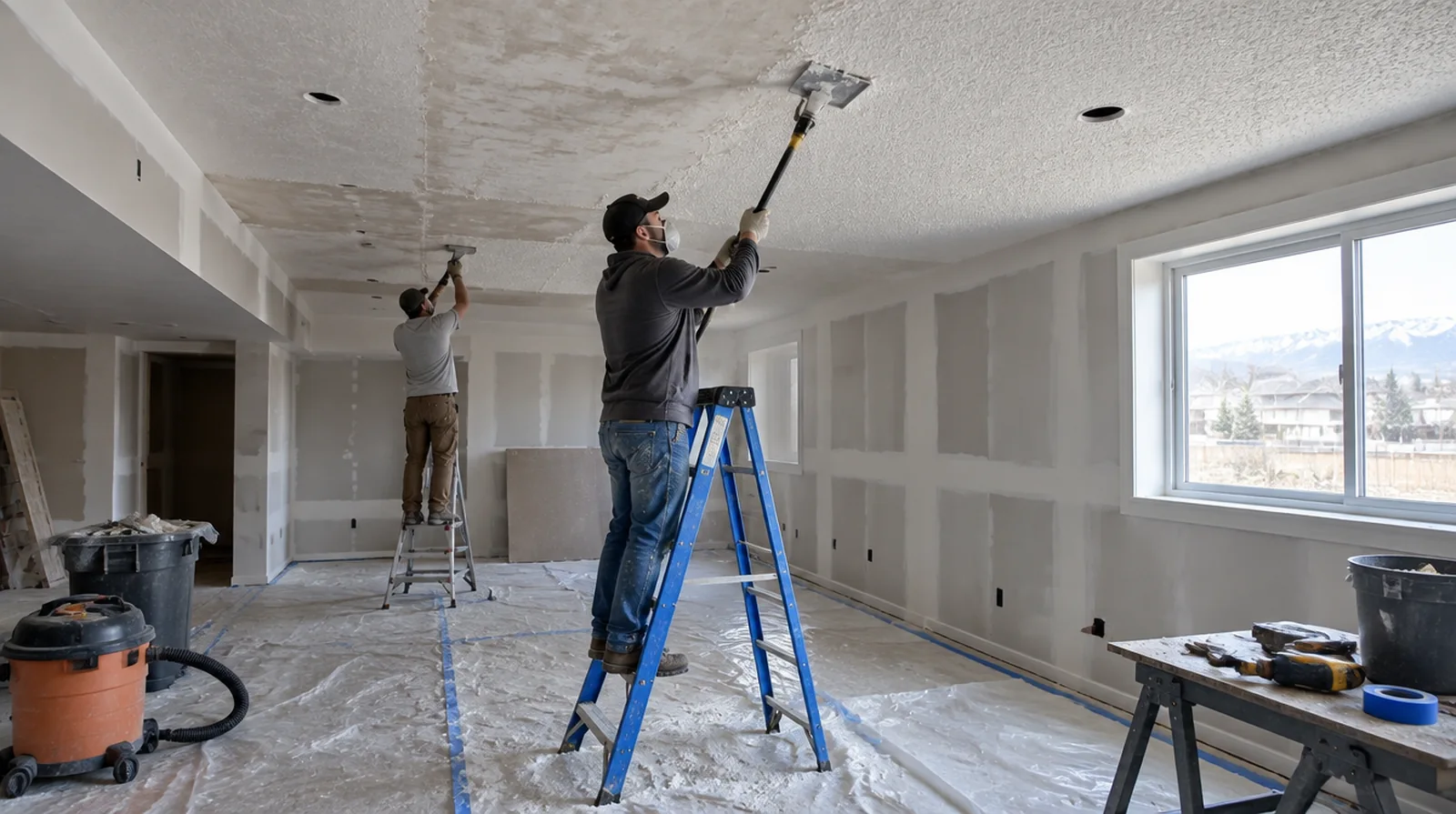
Plan cleanup and reopening
Allow for debris removal, drying and decorating rather than assuming the room is complete immediately after scraping. Allow for drying and painting time instead of assuming the space is usable immediately after scraping. When damage followed other building work, describe the nearby alterations and the sequence between those changes and the first visible defect.
Protect the entire room
Overhead coating removal can distribute debris throughout the interior unless protection is comprehensive. Arrange masking, furniture relocation and a suitable removal route rather than covering only a small patch below. If the final paint is already chosen, share its sheen and color early because those choices influence how preparation of the surface is judged.
Plan fixture coordination
Ceiling fittings may require qualified disconnection or other separate handling before access is available. The scope should identify who disconnects and reinstalls them rather than leaving that responsibility unclear. For a project involving a building manager, confirm access hours and protection requirements before promising a start date or a short completion window.
Establish material safety
Do not disturb an older ceiling texture until any material safety concerns have been evaluated. Where asbestos could be present, arrange suitable testing and follow the applicable process before removal begins. When reviewing the finished work, use the agreed lighting and natural room viewpoints so the assessment reflects the intended use of the space.
Choose the final surface
A smooth ceiling and a new decorative texture involve distinct levels of preparation. A new patterned finish and a flat smooth ceiling can need substantially different preparation. While a removed panel exposes the wall cavity, complete the necessary review of concealed work before replacement board closes the opening.
Separate specialist work
Confirmed hazardous material removal is not an ordinary drywall scraping task. A suitable specialist should define containment, handling and disposal before any finish restoration is planned. If the surface condition is uncertain, allow for an assessment that can distinguish stable material from layers that should not be covered.
Review ceiling condition
A textured ceiling can hide old repairs and seams that were never prepared for a smooth appearance. A smooth replacement finish could call for additional repair after the coating has been safely removed. If the decorative coating is already chosen, share its sheen and color early because those choices influence how preparation of the surface is judged.
Confirm primer and paint
The newly exposed and repaired ceiling needs an appropriate coating plan after it dries. Clarify whether the drywall quote stops at a prepared for decoration finish or includes decorative coatings. While a removed panel exposes the wall cavity, complete the necessary review of concealed work before replacement board closes the opening.
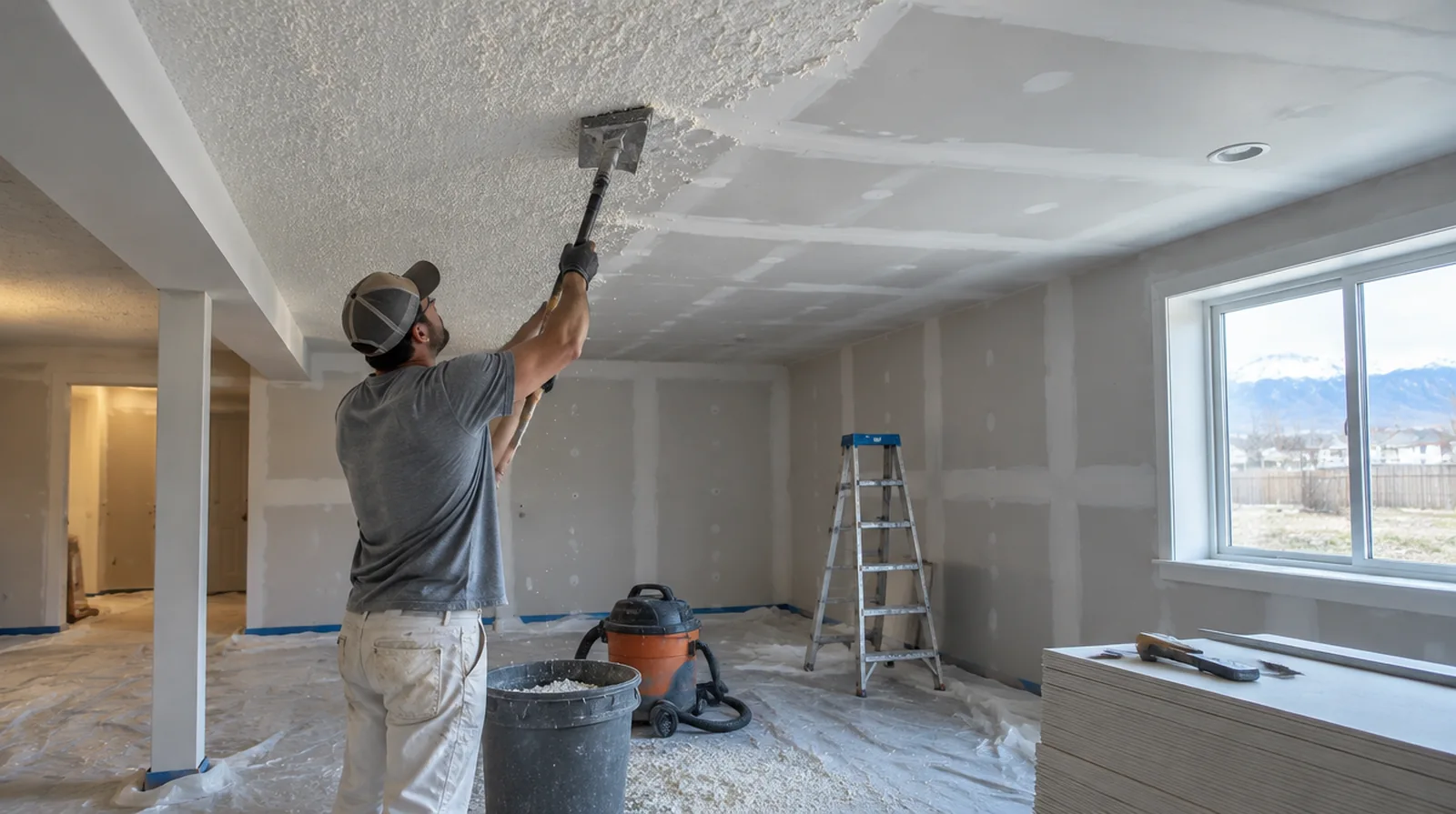
Avoid unnecessary saturation
Avoid a process that introduces so much water that it damages the supporting gypsum. Choose the method with regard to both the coating response and the condition of the board beneath it. For a surface that will receive wall covering, share the product requirements early so the finishing stage supports the planned decorative treatment.
Check for painted coatings
Paint over a textured coating could change how readily the material releases. A small controlled assessment helps explain labor and potential damage to the underlying surface. When the history of a repair is uncertain, note when it became noticeable and whether its appearance has altered across different seasons.
Project context in West Jordan
Carpet and trim usually come after drywall, so agree on the order with those trades. Plan heat in the space before finishing begins.
Scope questions before finishing
If the completion date matters most, allow for intervals between coats as well as active labor rather than assuming the entire process happens continuously.
Where a finished perimeter is prominent, decide whether trim stays in position or is removed before agreeing how the new surface meets that edge.
If a separate painter completes decoration, agree the condition of the handed over surface and assign responsibility for small final corrections.
Where flooring is staying in place, agree on protective coverings and check that tools and material handling will not damage the noticeable finish.
If the coating stability is unclear, assess which layers are adequately bonded and which should be removed rather than simply hidden beneath new material.
If the proposal requires return visits, identify the purpose of each stage and the intervals during which finishing material needs to remain undisturbed.
If the surface condition is uncertain, allow for an assessment that can distinguish stable material from layers that should not be covered.
If the wall work belongs to a broader renovation, coordinate its order with flooring, cabinetry and trim instead of scheduling finishing in isolation.
For an initial assessment from pictures, provide an overall room photograph and a detailed view of the defect so both context and scale are apparent.
When more damage could be hidden, ask how any added scope will be documented before extra material is removed or replaced.
When a wall has repeated defects, keep a record of earlier repair attempts so a new assessment does not simply repeat an unsuccessful approach.
If materials must cross common building areas, plan the protection and access route so other occupants are not needlessly obstructed by deliveries.
Explore the West Jordan drywall overview for related options, or read the project planning information before arranging the next stage.
More planning details for West Jordan
West Jordan basements are a common place for new drywall, from family rooms to extra bedrooms. Before boards go up, confirm that framing, insulation and any egress window work have been inspected where required. Window wells and stair turns limit how full sheets come down, so measure the path first.