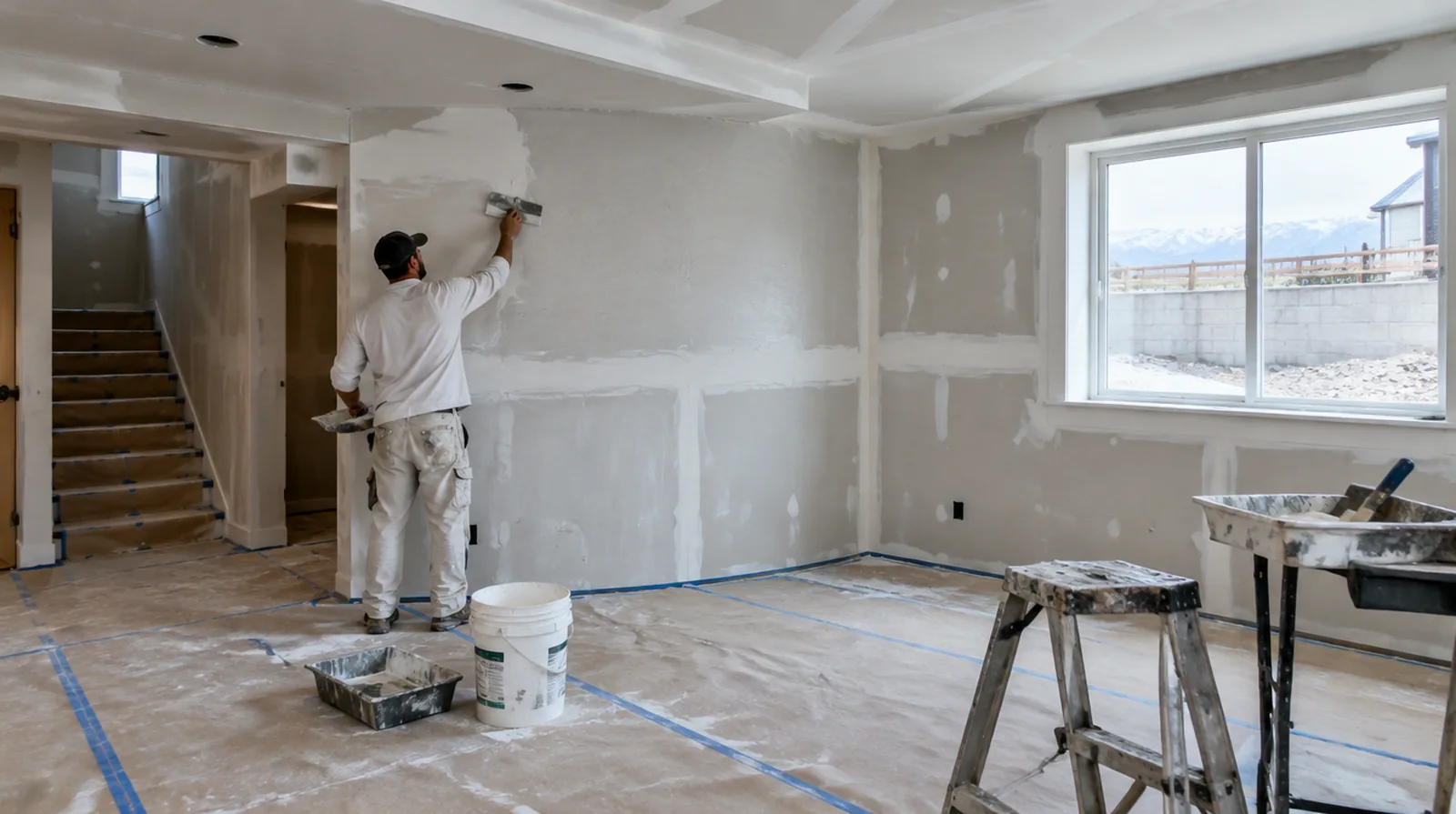
Check underlying movement
Surface refinement cannot stabilize framing movement or repair board that no longer holds securely. Assess recurring cracks and complete necessary reinforcement before covering the area with a skim. When the history of a repair is uncertain, note when it became noticeable and whether its appearance has altered across differing seasons.
Define the smoothing target
Flattening a light texture is distinct from correcting deep waves across an entire wall. Describe the expected improvement and any retained wall variation in the agreed finish scope. When a paint contractor follows the drywall work, define the surface condition being handed over and decide who handles any minor final touch ups.
Inspect using side light
A surface can appear even under direct lighting while revealing shallow tool lines from the side. Review the dry wall under the conditions that will matter after the interior is decorated. If scheduling is the main concern, separate hands on labor from drying intervals instead of treating every visit as a full day of active work.
Clean and prepare the wall
Dust, grease and incompatible residues can interfere with adhesion. Preparation may include cleaning and a suitable bonding treatment based on the condition of the current surface. Before comparing two proposals, check that both include the same protection, finishing and cleanup boundaries instead of comparing totals alone.
Apply controlled thin layers
Build a refined surface with controlled applications instead of a heavy unsupported deposit. More than one pass may be necessary where the original texture creates deeper low points. For a small repair with extensive setup, compare the total scope instead of assuming the price should follow the hole dimensions alone.
Choose paint with the finish
Higher sheen coatings can emphasize small variations that a matte finish makes less obvious. Discuss the final decorative plan before deciding how extensive the surface preparation needs to be. For a distinctive existing pattern, retain a reference sample or detailed picture to make the matching discussion more specific.
Refine with minimal sanding
Careful application limits how much abrasive refinement is needed later. Dust control should still be planned because broad wall work may create fine airborne particles. When the decorative coating has been selected, tell the finisher its intended sheen and color while the substrate preparation standard is still being agreed.
Let each coat dry
Allow each application to become ready for the next under the space conditions actually maintained. A rushed next coat can drag or disturb material that has not set up sufficiently. When the wall has strong reflected light, look at the full plane instead of judging only the narrow strip immediately beside the patch.
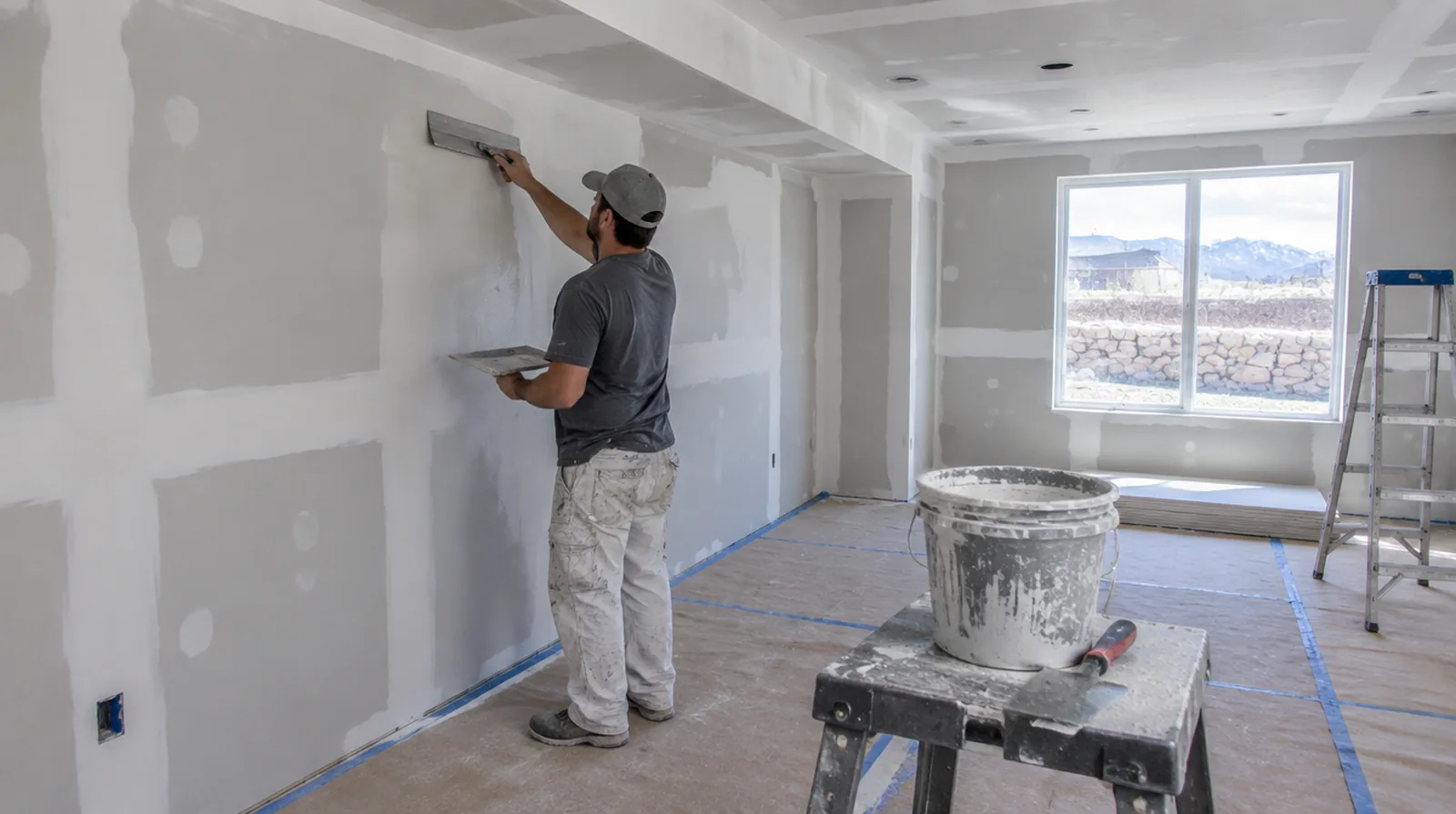
Work around trim carefully
Baseboards, frames and fixed fittings create edges that need neat transitions and protection. Talk through whether removing trim is worthwhile or whether the finish will stop cleanly against it. Where a surface has been painted many times, consider whether differences in texture or sheen will require a wider decorative treatment.
Assess the existing coating
A thin new finish depends on the strength of the coating that will remain underneath it. The assessment should distinguish a sound but uneven surface from one that is actively peeling. For walls beside bright windows, review a dry sample from an oblique angle as well as looking straight at the repaired surface.
Project context in West Jordan
Carpet and trim usually come after drywall, so agree on the order with those trades. Ask how outlets, lighting and ducts will be cut in so the board does not need patching later.
Scope questions before finishing
When a quote includes multiple visits, ask what happens during each stage and when the interior needs to remain undisturbed between coats.
Where flooring is staying in place, agree on protective coverings and check that tools and material handling will not damage the visible finish.
At an edge beside built in furniture, state whether the obstruction will be removed or whether finishing stops at the section that can be reached.
For work spread across different planes, record their dimensions separately and describe the boundary of the treatment on each surface.
While a removed panel exposes the wall cavity, complete the necessary review of concealed work before replacement board closes the opening.
For a project with several trades, agree which inspection or handover point must happen before the next person starts work.
For an initial assessment from pictures, provide an overall room photograph and a detailed view of the defect so both context and scale are apparent.
If there is a fixed move in date, reserve enough time for the coating stages after drywall work rather than counting only the installation period.
If materials must cross common building areas, plan the protection and access route so other occupants are not needlessly obstructed by deliveries.
Before comparing two proposals, check that both include the same protection, finishing and cleanup boundaries instead of comparing totals alone.
Where light reflects along the wall, inspect the complete plane instead of limiting the review to the edge immediately next to the repaired section.
For a surface that will receive wall covering, share the product requirements early so the finishing stage supports the planned decorative treatment.
Explore the West Jordan drywall overview for related options, or read the project planning information before arranging the next stage.
More planning details for West Jordan
West Jordan basements are a common place for new drywall, from family rooms to extra bedrooms. Before boards go up, confirm that framing, insulation and any egress window work have been inspected where required. Window wells and stair turns limit how full sheets come down, so measure the path first.