Protect surrounding finishes
Mask adjacent materials against sprayed compound and other application debris. The protection plan should cover the actual application area instead of only the original hole. When the same defect has returned, share information about previous repair methods so the next assessment can consider why they did not last.
Identify the existing pattern
First determine how the current texture creates its pattern and relief. Examine the surface in the light the space actually receives before choosing a spray or hand applied method. For a tightly furnished room, plan temporary storage and the minimum working clearance before material is carried into the property.
Consider hand applied surfaces
Troweled textures need attention to tool direction, pressure and spacing between repeated shapes. A representative trial is useful when there is no standard machine setting that reproduces the existing finish. At a repair beside an opening, allow clearance for moving board through the doorway and space to use the finishing tools effectively.
Judge from normal positions
Assess the dried texture from everyday viewpoints rather than judging only a close view of a wet sample. Include side lighting and the planned decorative paint sheen when deciding whether the result meets the agreed scope. When a wall has repeated defects, keep a record of earlier repair attempts so a new assessment does not simply repeat an unsuccessful approach.
Blend beyond the patch
A sharp rectangular transition can expose the repair even when the new pattern is otherwise similar. Gradually extending the texture into the surrounding surface may make the blend less abrupt. When photographs are used for an initial discussion, include a wide room view as well as a close view so scale and surrounding finishes are understandable.
Allow time before painting
Applying paint before the texture has dried can disturb the pattern or produce uneven absorption. Establish whether the proposal includes that decorative stage or hands the surface over to another trade. When reviewing the finished work, use the agreed lighting and natural room viewpoints so the assessment reflects the intended use of the space.
Use appropriate primer
New texture and adjacent painted material can absorb finish coats at differing rates. Choose suitable primer to support the coating system without unnecessarily flattening the intended pattern. While a removed panel exposes the wall surface cavity, complete the necessary review of concealed work before replacement board closes the opening.
Check the underlying repair
A decorative pattern will not reliably disguise a ridge or an uneven board joint underneath it. Complete a stable level repair before trying to reproduce the surrounding texture. For a surface that will receive wall covering, share the product requirements early so the finishing stage supports the planned decorative treatment.
Control application conditions
Compound consistency and application distance affect how a sprayed pattern lands on the wall. Room conditions and drying rate also influence when a knockdown pass should be made. At the handover inspection, review the finish from ordinary room positions using the lighting conditions that were agreed for the work.
Set realistic blend expectations
An exact invisible match is not always possible on a weathered or repeatedly painted surface. If local matching remains obvious, discuss whether a wider surface treatment would be preferable. When the decorative coating has been selected, tell the finisher its intended sheen and color while the surface preparation standard is still being agreed.
Project context in West Jordan
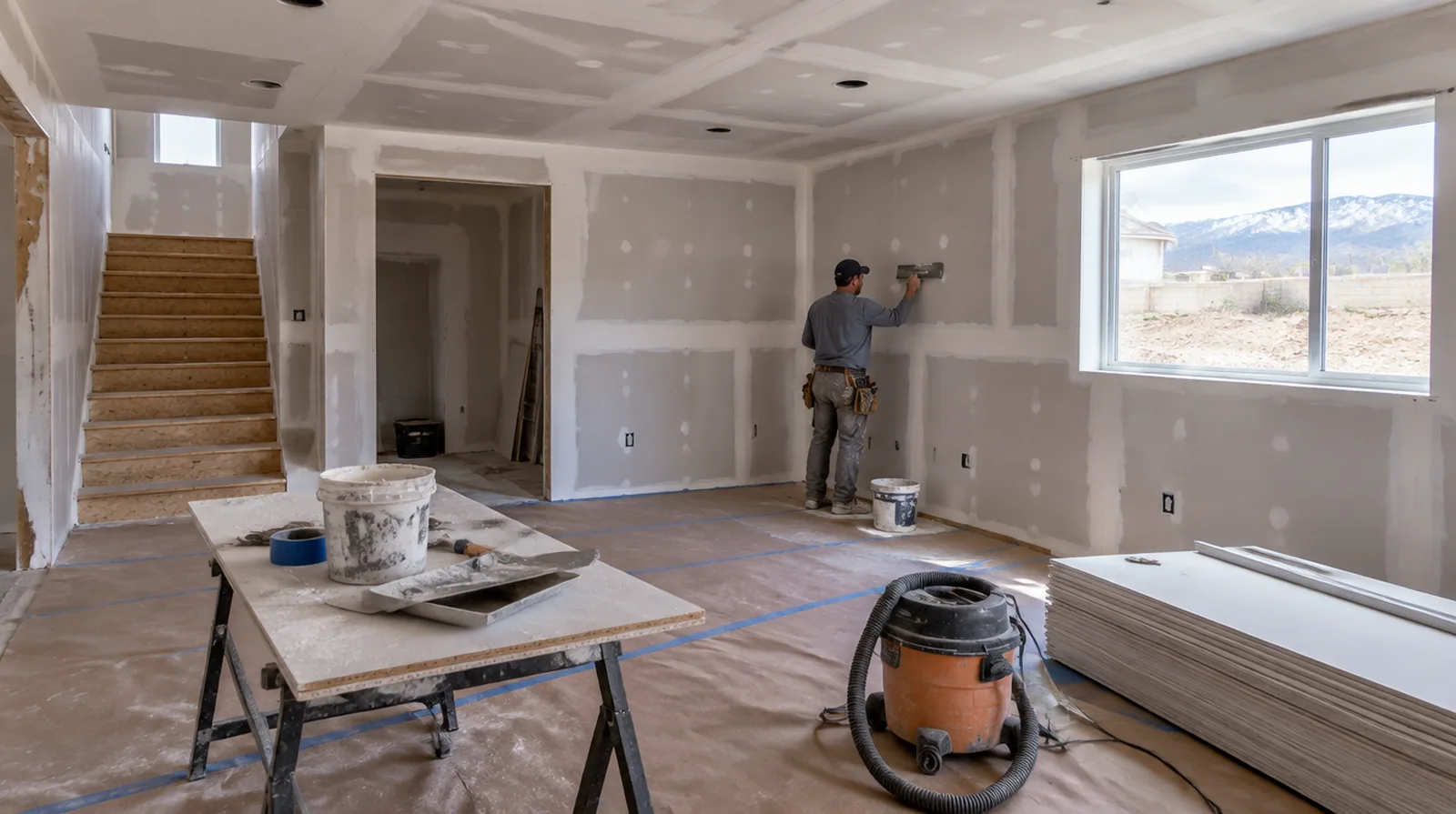
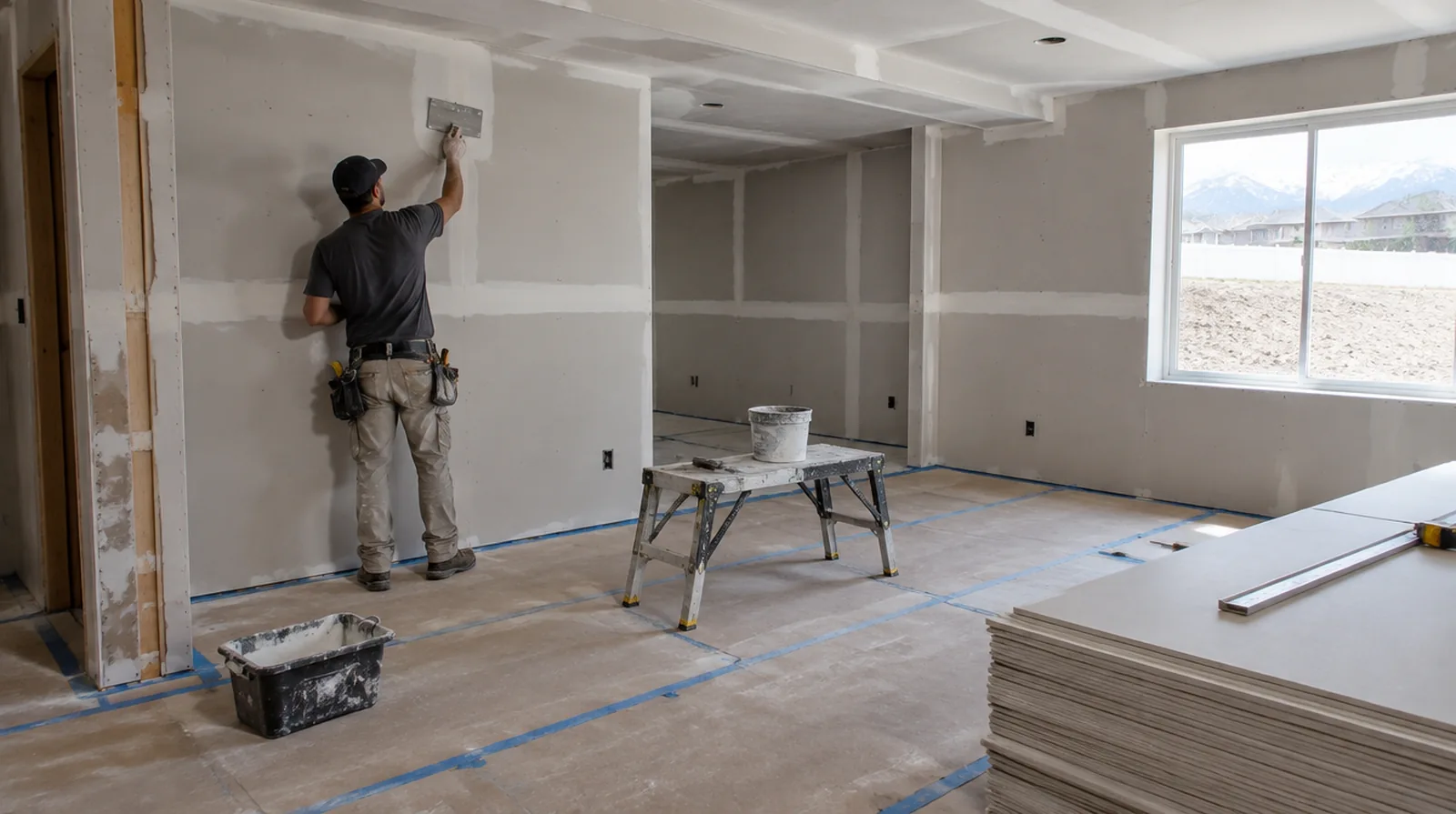
West Jordan basements are a common place for new drywall, from family rooms to extra bedrooms. Ask how outlets, lighting and ducts will be cut in so the board does not need patching later.
Scope questions before finishing
Before comparing two proposals, check that both include the same protection, finishing and cleanup boundaries rather than comparing totals alone.
For a distinctive existing pattern, retain a reference sample or detailed picture to make the matching discussion more specific.
When the wall has strong reflected light, look at the full plane rather than judging only the narrow strip immediately beside the patch.
For a project with several trades, agree which inspection or handover point must happen before the next person starts work.
Where the quoted work stops before painting, request a clear description of what remains so the next decorating stage can be priced realistically.
When photographs are used for an initial discussion, include a wide room view as well as a close view so scale and surrounding finishes are understandable.
When panel replacement exposes a cavity, resolve any required inspection before that opening is closed and the finishing work begins.
Where flooring is staying in place, agree on protective coverings and check that tools and material handling will not damage the visible finish.
If a household member is sensitive to dust, discuss containment and cleaning expectations before choosing how to stage the room work.
For walls beside bright windows, review a dry sample from an oblique angle as well as looking straight at the repaired surface.
In a room with little free floor space, identify temporary storage for belongings and establish enough clearance for the work before delivery.
If access passes through a shared space, arrange protection and a delivery route that do not unnecessarily obstruct other occupants.
Explore the West Jordan drywall overview for related options, or read the project planning information before arranging the next stage.
More planning details for West Jordan
Before boards go up, confirm that framing, insulation and any egress window work have been inspected where required. Window wells and stair turns limit how full sheets come down, so measure the path first. The dry Utah air helps compound set, but cold winter months can make an unheated lower level slow to dry.